Customized Specialty Treatments
Kyphoplasty
Vertebral Compression Fractures
Vertebral compression fractures occur when a bone in the spine collapses, most often from osteoporosis, but also from trauma, long-term steroid use, or metastatic disease. The fracture can cause sudden, sharp back pain, loss of height, and over time a forward-stooping posture known as kyphosis. Patients commonly report difficulty with activities that were routine before the injury, including standing, walking, and sleeping comfortably.
- Most Common Cause Osteoporosis, especially in postmenopausal women and adults over 60.
- Other Causes Trauma, long-term corticosteroid use, multiple myeloma, and metastatic cancer.
- Typical Symptoms Sudden back pain at the fracture site, pain that worsens with standing or walking, reduced mobility, and gradual loss of height.
- Conservative Care Rest, bracing, pain medication, and physical therapy are often tried first.
- When Kyphoplasty Is Considered When pain persists despite conservative care, or when the fracture is recent and stabilization may shorten recovery and reduce the risk of additional fractures.
What is Kyphoplasty
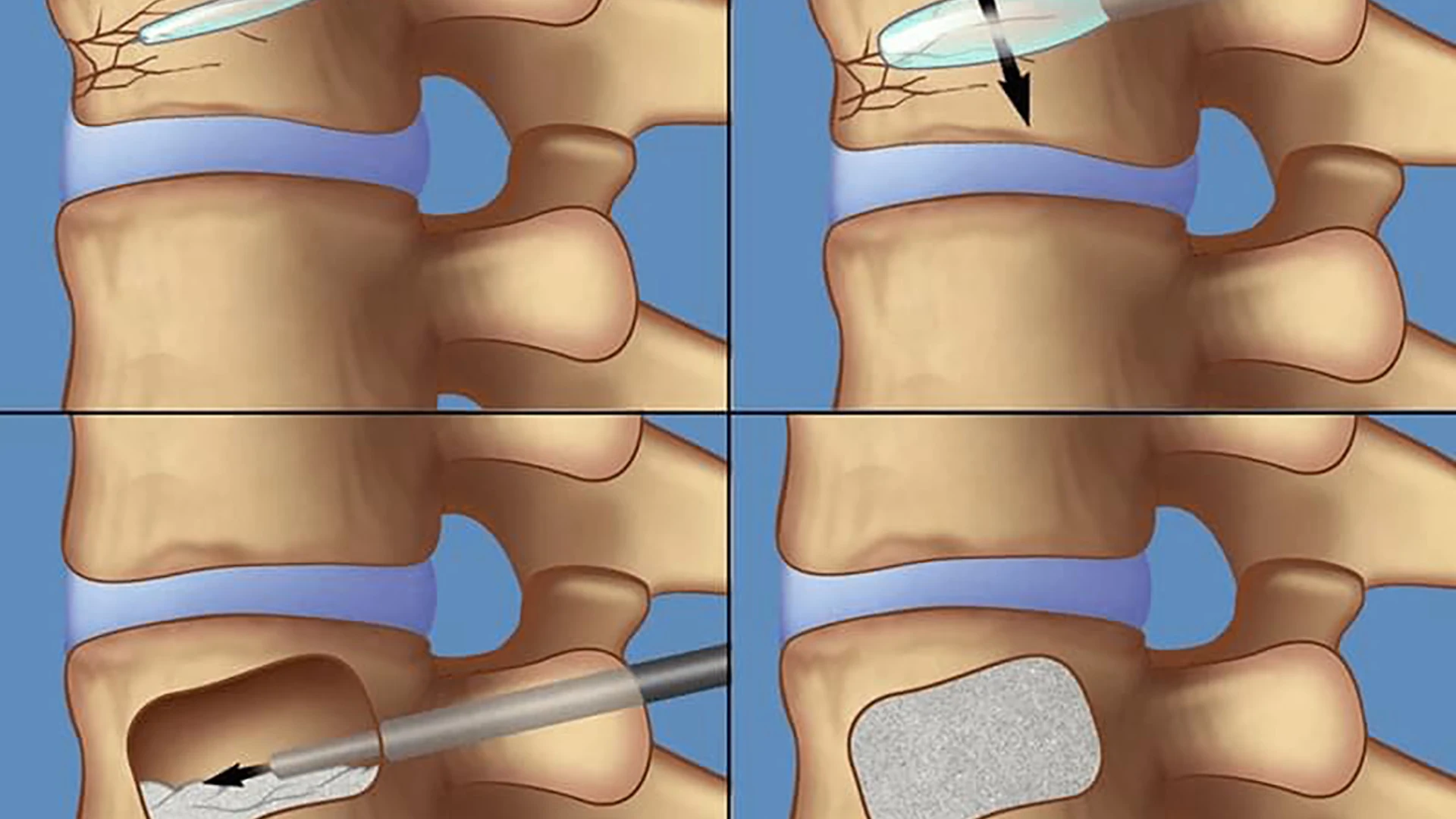
Kyphoplasty is a minimally invasive procedure used to stabilize vertebral compression fractures and restore a portion of the lost vertebral height. Through a small incision, a narrow tube is guided into the fractured vertebra under x-ray imaging. A small balloon is inflated inside the bone to create a cavity and gently lift the collapsed segment back toward its original position. The balloon is then removed and the space is filled with orthopedic bone cement, which hardens within minutes and stabilizes the fracture.
The procedure is sometimes called balloon kyphoplasty to distinguish it from vertebroplasty, an earlier technique that injects cement directly into the fractured vertebra without first creating a cavity. Kyphoplasty offers an additional step that allows for some restoration of vertebral height and a more controlled cement placement.
How the Procedure Works
Most patients are treated as outpatients, and the procedure usually takes 30 to 45 minutes per fractured level. It is performed under local anesthesia with sedation or, when needed, general anesthesia.
- Preparation Imaging is reviewed and the affected vertebra is identified. Vital signs are monitored throughout.
- Access A small incision is made in the back. A narrow cannula is advanced into the fractured vertebra under continuous x-ray guidance.
- Cavity Creation A bone tamp balloon is inserted through the cannula and slowly inflated, creating a controlled cavity and helping restore vertebral height.
- Cement Placement The balloon is removed and orthopedic bone cement is placed into the cavity, where it hardens within minutes.
- Closure The cannula is removed and the small incision is closed, typically with a single suture or surgical strip.
Who Is a Candidate
Kyphoplasty is most often recommended for patients with recent compression fractures whose pain has not responded to conservative care. Candidacy depends on the age of the fracture, the patient's overall health, imaging findings, and the cause of the fracture. Dr. Boddu reviews each patient's history and imaging before recommending the procedure, and works with referring physicians when appropriate.
Patients who may benefit include those with osteoporotic compression fractures, fractures related to multiple myeloma or metastatic disease, and select traumatic fractures. Older fractures may still respond in some cases and warrant evaluation rather than assumption.
Recovery and What to Expect
Many patients report meaningful pain relief within 24 to 48 hours of the procedure, although individual response varies. Most return to light daily activities the same day or the day after, with restrictions on heavy lifting and strenuous activity for a short period. A follow-up visit is scheduled to review healing and discuss next steps, which often include osteoporosis management to reduce the risk of additional fractures.
Because compression fractures often signal underlying bone loss, a complete treatment plan addresses both the fracture itself and the bone health that allowed it to occur. Dr. Boddu coordinates with primary care and endocrinology when appropriate.
Risks and Considerations
Kyphoplasty has a strong safety record when performed by experienced physicians, though no procedure is without risk. Possible complications include cement leakage outside the vertebra, infection, bleeding, allergic reaction, and rarely, neurologic injury or pulmonary embolism. Adjacent vertebrae may fracture in the months following treatment, particularly in patients with untreated osteoporosis, which is one reason bone health management is part of the long-term plan.
Dr. Boddu is a board-certified anesthesiologist and board-certified pain medicine specialist with more than 25 years of experience in interventional pain procedures. Every kyphoplasty case begins with a full evaluation of imaging, medical history, and prior treatments before the procedure is recommended.